
How Important Is Website Design for SEO?
When business owners ask me “How Important Is Website Design for SEO?”, my answer is always the same: it’s incredibly important because your website impacts how and when your business is found online.
One of the biggest misconceptions I see is that SEO is only about keywords. While keywords are an important part of search engine optimization, they are only one piece of a much bigger strategy.
Your website structure, layout, user experience, navigation, and content all play a role in helping search engines understand your business and helping potential clients find the information they need.
After auditing over 50 websites for wedding professionals and creatives, one thing I see again and again is that many websites are missing the strategic foundation needed to support SEO. The problem usually isn’t that they need to add more keywords. The problem is that their website was built without a clear strategy.
A website is more than a checkbox you complete when starting your business. It’s a tool that helps you get in front of the right people.
What Does Website Design Have to Do With SEO?
SEO is about helping search engines understand your website so they can show it to people searching for your services.
Your website design impacts SEO because search engines look at more than just the words on your page. They also consider how your website is structured and how easy it is for visitors to use.
A strategically designed website helps search engines understand:
- What your business offers
- Who your services are for
- Which pages are the most important
- How your content connects together
- Whether your website provides a good experience for visitors
Think about your website from your ideal client’s perspective.
When someone lands on your website, can they quickly understand:
- Who you are
- What you offer
- Whether you are the right fit for them
- How to take the next step
If visitors are confused or cannot find the information they need, they are more likely to leave your website. A website should be designed to guide people through the experience, not make them search for answers.
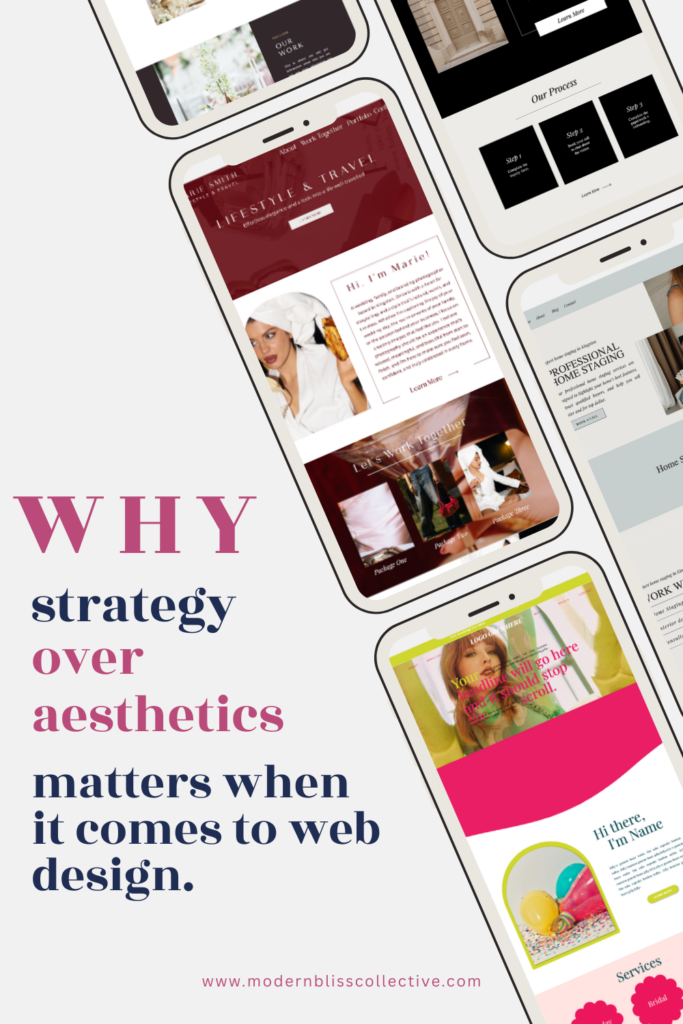
SEO Is More Than Adding Keywords
When most people hear SEO, they immediately think about keywords.
They think they need to add specific phrases throughout their website and that will automatically help them rank higher.
But SEO has evolved.
Especially with the rise of AI and changing search behaviours, search engines are becoming better at understanding context, user intent, and the quality of information being provided.
This means your website needs more than keyword placement. It needs strategy.
A strong SEO foundation includes:
- Clear website structure
- Strategic headings
- Organized navigation
- Helpful content
- Dedicated service pages
- Location-based information
- Internal links
- Mobile optimization
Keywords help search engines understand what you do, but your overall website experience helps determine whether your website is valuable to the people searching.
Why Website Structure Matters for SEO
One of the biggest issues I find when reviewing websites is a lack of structure.
Many business owners have beautiful websites, but they were designed without considering how visitors move through the website or how search engines interpret the content.
Common issues I see include:
- Missing service pages
- Confusing navigation
- Poor heading structure
- Little to no internal linking
- No clear strategy behind the website pages
For example, a wedding photographer should not rely only on a homepage to explain their entire business.
They should have strategic pages that answer the questions potential clients are searching for:
- What type of photography do you specialize in?
- Where do you serve?
- What does the experience look like?
- Why should someone choose you?
A website should make it easy for both people and search engines to understand your business.
If people can’t find what they need, Google will have a harder time understanding why your website should appear in search results.
A Real Example: Helping a Photographer Reach Page One on Google
One of my favourite examples of how website design impacts SEO is a photographer I worked with during a website redesign.
She had previously DIY’d her website and was ready for a more strategic approach. One of her biggest goals was improving her visibility on Google and making sure her website could continue to support her as search evolves.
Before designing her website, we started with strategy.
We discussed what she wanted to be known for, who she wanted to attract, and what potential clients needed to know before reaching out.
From there, we focused on creating a website that was built intentionally.
Some of the changes we made included:
- Improving the navigation and menu structure
- Making the website mobile-friendly
- Creating a clear heading hierarchy
- Simplifying the layout
- Improving calls-to-action
- Adding location-based content
Only 28 days after launching her new website, she started ranking on the first page of Google.
This is exactly why I believe website design and SEO cannot be separated. The design process is not just about creating something beautiful—it’s about creating something that works.
A Beautiful Website Does Not Automatically Mean Better SEO
There is nothing wrong with wanting a beautiful website.
Your website should reflect your brand, create a strong first impression, and attract the right clients.
However, a beautiful website alone does not guarantee that people will find you.
A website can look amazing but still struggle with SEO if it:
- Does not have a clear structure
- Is difficult to navigate
- Does not explain your services clearly
- Is missing important content
- Has no strategy behind the design
This is something I talk about more in my post about how to choose the right web designer for your wedding or creative business.
The goal is not to choose between a beautiful website and an SEO-friendly website.
You need both.
SEO helps people find your website, while intentional design helps keep visitors there long enough to learn about your business and take action.
How User Experience Impacts SEO
Good website design creates a better experience for your visitors.
When someone lands on your website and can easily find the information they need, it helps show search engines that your website is providing valuable information.
Your website should guide visitors through a clear journey:
- Discover your business
- Learn about your services
- Build trust
- Take the next step
A website that is confusing or overwhelming can cause potential clients to leave before they ever learn why they should work with you.
Your website should not just exist online. It should actively support your business goals.
If you’re curious about whether a website can actually help you grow your business, I dive deeper into this in my blog post Can a Web Designer Get Me More Customers?
How to Create an SEO-Friendly Website
If you are planning a website redesign, SEO should be considered before the design process even begins.
Start With Your Branding Strategy
Before designing a website, you need to understand who you are trying to attract.
This is why branding is such an important first step.
Your brand strategy helps you understand:
- Your ideal client
- Your messaging
- Your positioning
- What makes your business different
When you understand your audience, you can create a website that speaks directly to the people you want to work with.
This is also why I believe branding and website design should work together. Your website should support your brand and help communicate your value.
Create Content That Supports Your SEO Goals
Your website is only one piece of your marketing ecosystem.
To continue improving your visibility online, you should focus on creating content that answers the questions your ideal clients are already searching for.
This can include:
- Blogging consistently
- Creating helpful resources
- Updating your website content
- Sharing educational content
For wedding professionals especially, creating content around your expertise can help attract higher-quality inquiries. I share more about this in my post about how to attract luxury wedding clients.
Continue Updating Your Website After Launch
Launching your website is not the end of your SEO strategy.
Your website should continue to evolve as your business grows.
Updating your website helps show that your business is active and your information is current.
This can include:
- Adding new portfolio work
- Updating testimonials
- Refreshing service pages
- Writing blog posts
- Updating outdated information
One of the reasons I design websites on Showit is because I want my clients to feel confident making smaller updates themselves instead of feeling like they need a developer every time something changes.
For clients who need additional support, VIP Days can be a great way to make strategic updates, improve website content, and continue strengthening their online presence.
Your Website Is a Marketing Tool, Not Just a Design Project
After years of working with wedding professionals and creatives, one thing I know for sure is that your website should do more than look pretty.
It should help people find you, understand what you offer, and feel confident taking the next step.
The best websites combine:
- Strong branding
- Strategic design
- SEO foundations
- Clear messaging
- A seamless user experience
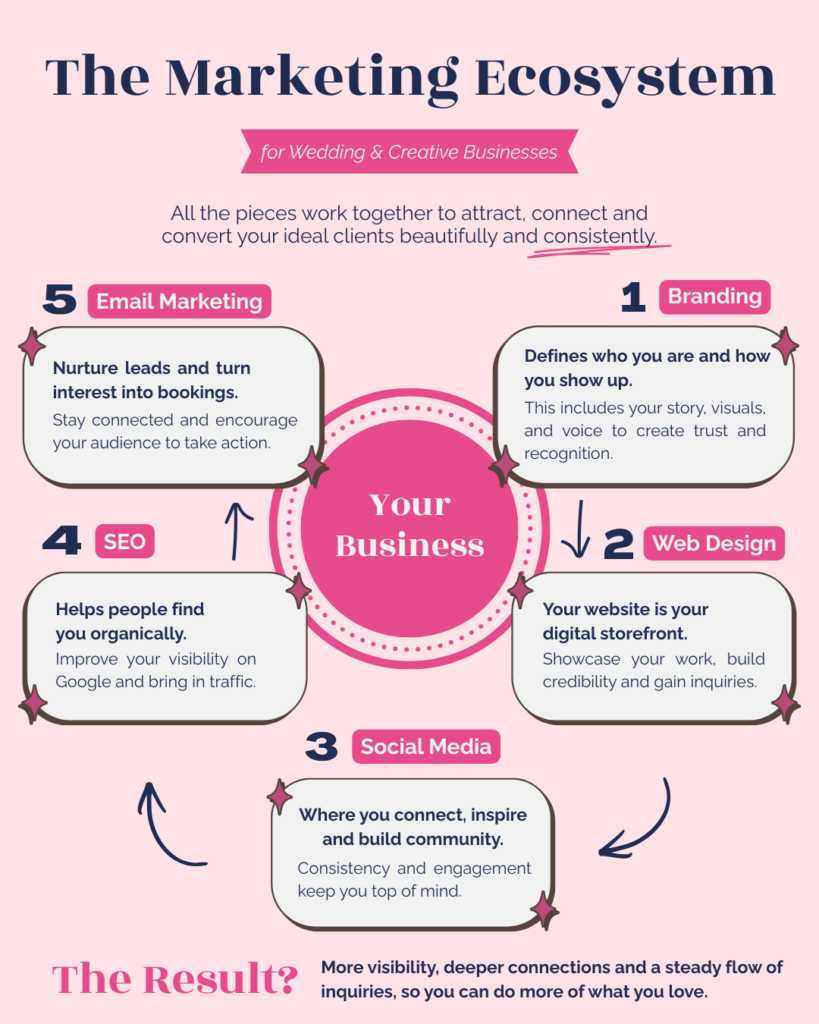
A website is more than a checkbox.
It is a tool that helps you get in front of the right people.
And when it is designed strategically, it can become one of your most valuable marketing assets.
If you’re ready to create a website that looks beautiful and supports your business growth, you can learn more about our brand and website design services.

Digital Marketing Specialist that helps wedding pros and creatives level-up their online presence through branding, web design, and social media manager.
Hi, I'm Sarah
Branding, website design, social media management, and email marketing.
Work Together

Website Audit Quiz!
POV: When brand alignment is your love language.
Studio Rental
Branding & Web Design
Marketing
services that support your vision

Your one-stop-shop for in-person content creation, photography AND all your marketing needs. You’re committed to elevation, brand alignment, establishing authority in your market,& growth.
Let’s get it, girl!

