
Common Website Mistakes Wedding Professionals Make
If you’re a wedding professional, you’ve probably heard that you need a website. But simply having a website doesn’t mean it’s actually working for your business. Here are the most common website mistakes wedding professionals make.
I’ve audited more than 50 websites and worked with dozens of creative business owners to improve their online presence. I’ve seen businesses with beautiful websites struggle to generate inquiries, while strategic website changes have helped others increase their traffic, inquiries and bookings.
The biggest lesson I’ve learned is this:
A pretty website doesn’t automatically book clients.
Your website needs to do more than showcase beautiful images. It needs to help the right people find you, understand what makes you different, trust you and take the next step.
Here are some of the most common website mistakes wedding professionals make and what you can do instead.
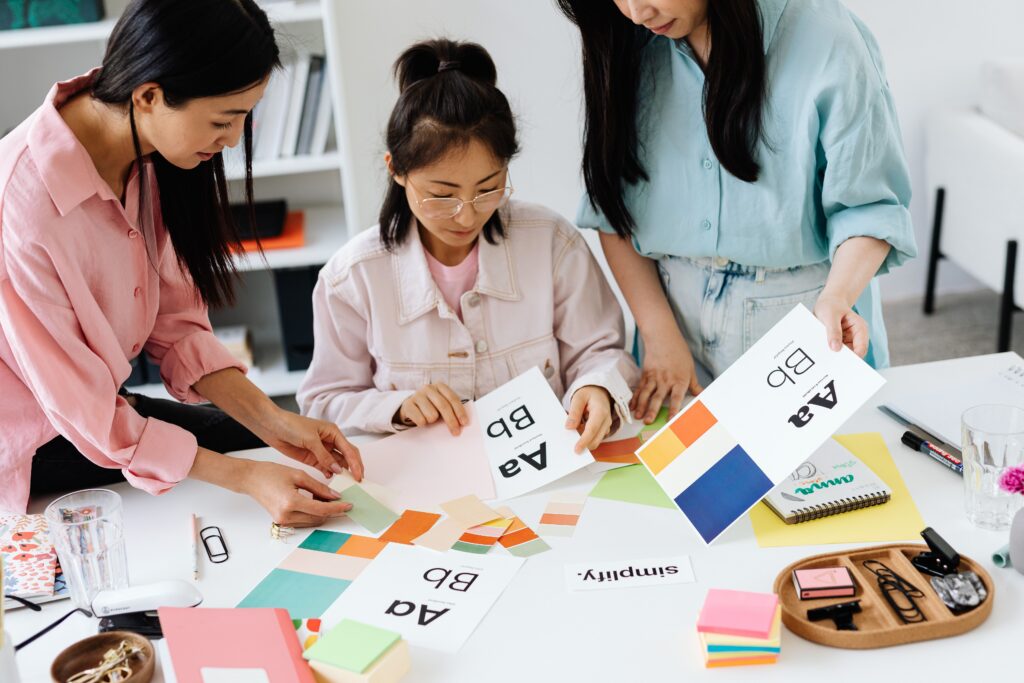
Your Website Doesn’t Have a Strong Brand
One of the first things I notice when reviewing a wedding professional’s website is whether they have a clear, recognizable brand.
All too often, the website looks beautiful, but it also looks like every other wedding website. The same fonts. The same neutral colours. The same template. The same generic messaging.
There is nothing memorable.
And when your potential clients are comparing multiple photographers, planners, florists, venues or other wedding vendors, blending in can be a problem.
Your brand should communicate who you are, who you serve, what makes you different and why your ideal client should choose you.
When I work on branding with a client, I don’t start by asking what colours they like. We start with customer research, so we can understand their ideal client and develop a clear brand position.
That strategy then influences the visual identity, messaging and website.
The goal isn’t simply to make your website look good.
It’s to make your business recognizable to the right people.
You’re Using a Platform That Wasn’t Built for Your Business
Another mistake I see is wedding professionals relying on platforms like Canva or Pixieset as their primary website.
I understand why these platforms are appealing. They’re easy to use, inexpensive and can help you get something online quickly.
But there’s a big difference between a website that’s easy to create and a website that’s strategically built to grow your business.
Your website needs to support things like:
- SEO and search visibility
- Strategic navigation
- A clear user journey
- Mobile optimization
- Strong calls to action
- Brand positioning
- Strategic website copy
- Easy access to important information
If your platform limits what you can do with those things, it can also limit what your website can do for your business.
Your website shouldn’t simply be an online portfolio.
It should be a marketing tool.
Your Website Isn’t Built Around the User Journey
One of the biggest common website mistakes wedding professionals make is designing their website around what they want to say instead of what their potential client needs to know.
Think about someone visiting your website for the first time.
They’re likely comparing you to other wedding professionals. They’re trying to figure out whether you’re right for them and whether they can trust you.
They’re asking questions like:
- Is this person available in my area?
- Do I like their work?
- What makes them different?
- How much do they charge?
- What’s it like to work with them?
- What is included?
- How do I inquire?
Your website should make answering those questions easy.
When I design websites, I think about the entire journey someone takes from landing on the site to becoming a lead. I want the path to booking or inquiring to be as simple as possible, ideally no more than three steps.
Every additional hurdle creates another opportunity for someone to leave.
Your website should guide people toward the next step instead of making them figure it out themselves.
Your Website Is Difficult to Navigate
Your website navigation should feel intuitive.
Unfortunately, I often see websites where important information is buried, page names are confusing or there are simply too many options.
Your potential client shouldn’t have to hunt for your pricing, services or contact information.
A good website should answer questions in a logical order.
Think about it like a conversation.
First, you introduce yourself and your business.
Then, you explain what you offer and who it’s for.
Then, you show people why they should choose you.
Then, you answer their questions and build trust.
Finally, you tell them what to do next.
That’s the user journey your website should create.
You’re Ignoring SEO
Having a website doesn’t automatically mean people will find it on Google.
One of the biggest opportunities I see wedding professionals missing is SEO.
Couples are actively searching for wedding vendors in specific locations and categories. They’re searching for photographers, florists, planners, venues and other vendors long before they ever follow them on Instagram.
Your website needs to clearly communicate what you do and where you work so search engines can understand when your business is relevant.
That means strategically considering things like:
- Page titles
- Headings
- Website copy
- Location-specific content
- Internal links
- Blog content
- Search terms your ideal clients use
SEO shouldn’t be something you think about after your website is finished.
It should be part of the website strategy from the beginning.
You’re Relying Too Much on Social Media and Referrals
This is one of my strongest opinions when it comes to the common website mistakes wedding professionals make.
I see too many wedding business owners relying almost entirely on Instagram, referrals and word of mouth.
Those things are incredibly valuable. But they shouldn’t be your only sources of potential clients.
Your website should be another way people can discover you.
It should work when you’re not posting on Instagram.
It should work when someone searches for a wedding vendor on Google.
It should work when a past client sends your website to a friend.
And it should work when someone hears your name and goes home to look you up.
Simply having a website isn’t enough.
If your website isn’t built properly, you may not see the results you’re expecting from it.
Your Website Isn’t Optimized for Mobile
Your potential clients are likely visiting your website from their phones.
That means your website needs to be designed for mobile, not simply resized to fit a smaller screen.
Your text needs to be easy to read. Buttons need to be easy to tap. Images need to display correctly. Navigation needs to be simple. And your inquiry process needs to be easy to complete.
A website that looks beautiful on desktop but is frustrating to use on mobile isn’t doing its job.
Mobile optimization needs to be considered throughout the design process, not treated as an afterthought.

You’re Designing for Yourself Instead of Your Ideal Client
You know your business better than anyone.
That’s exactly why it can be difficult to create a website from your own perspective.
You know what your packages mean. You know your process. You know why you started your business.
Your potential client doesn’t.
This is why customer research is such an important part of my branding process.
We need to understand what your ideal client wants, what they’re worried about, what questions they have and what influences their decision.
That information should influence your branding, messaging, copy and website structure.
The best website isn’t necessarily the one that makes the business owner say, “I love it.”
It’s the one that makes the right potential client say:
“This is exactly what I’ve been looking for.”
Your Website Is Beautiful but Doesn’t Give People a Reason to Choose You
This is probably the biggest misconception I see.
A beautiful website doesn’t automatically convert visitors into clients.
I’ve seen plenty of wedding websites that look amazing but don’t generate the results their owners want because they look just like everyone else’s.
Your potential client needs a reason to choose you.
Maybe it’s your personality. Maybe it’s your experience. Maybe it’s your process, your specialty or the experience you provide.
Whatever makes you different needs to be communicated.
Your website shouldn’t just answer, “What do you do?”
It should answer:
“Why should I choose you?”
That’s the difference between a website that’s simply attractive and one that’s strategically positioned.
What Should Your Wedding Website Actually Do?
If you’re wondering whether your website is working for your business, start by asking whether it clearly answers these five questions:
- What do you do?
- Who do you do it for?
- What makes you different?
- Why should someone trust you?
- What should they do next?
Your website should also make it easy for potential clients to navigate, find you through search and take action from their phone.
These are the things I look at when I work with wedding professionals, not just whether the website looks good.
Because common website mistakes wedding professionals make aren’t usually about choosing the wrong font or colour.
They’re about strategy.
Your Website Doesn’t Need to Be the Prettiest One on the Internet
It needs to be the right one for your business.
After working with wedding professionals and creative business owners, I’ve learned that the most effective websites aren’t necessarily the ones with the most complicated designs or the trendiest features.
They’re the ones that are strategically built around the business and its ideal client.
Your website should help people find you, understand you, trust you and take the next step.
So if your website isn’t bringing in the inquiries you hoped for, don’t automatically assume you need to post more on Instagram.
Take a closer look at your website.
Is your branding clear?
Can people easily navigate it?
Can they find you through Google?
Does it communicate what makes you different?
Is it easy to use on mobile?
And can someone figure out how to work with you within a few clicks?
If not, you don’t need a prettier website.
You need a better strategy.

Digital Marketing Specialist that helps wedding pros and creatives level-up their online presence through branding, web design, and social media manager.
Hi, I'm Sarah
Branding, website design, social media management, and email marketing.
Work Together

Website Audit Quiz!
POV: When brand alignment is your love language.
Studio Rental
Branding & Web Design
Marketing
services that support your vision

Your one-stop-shop for in-person content creation, photography AND all your marketing needs. You’re committed to elevation, brand alignment, establishing authority in your market,& growth.
Let’s get it, girl!

